



Trust and regulation – checked 25 September 2026
Dazzle Casino Trust, Regulation and Player Checks
 Available in GB
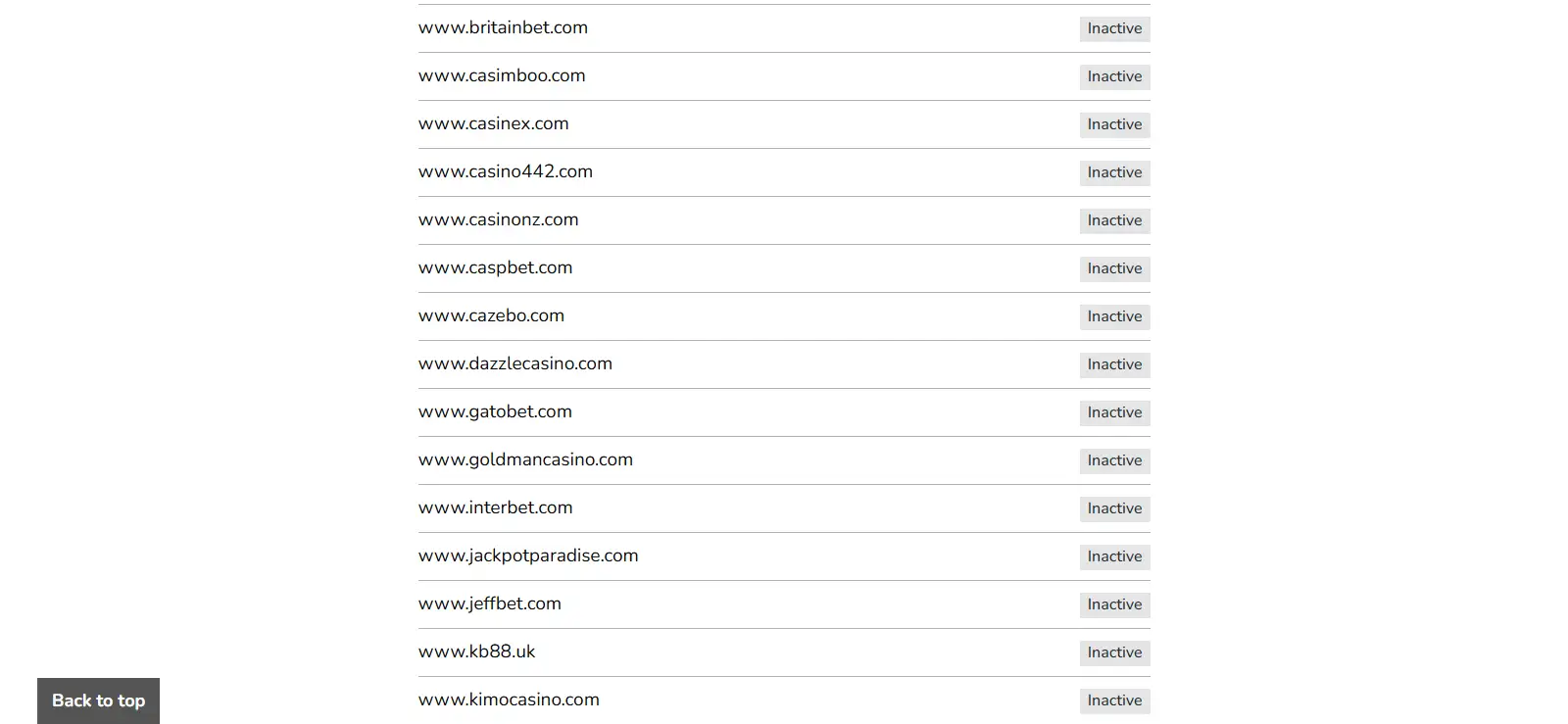
The most useful way to assess Dazzle Casino is to separate three different records. ProgressPlay Limited, the operator behind the brand, is listed by the UK Gambling Commission under account 39335 and has an active remote casino licence. The same UKGC register currently marks www.dazzlecasino.com as Inactive. Separately, ProgressPlay has a documented enforcement history, including a decision dated 9 May 2025 that resulted in a £1,000,000 penalty, a warning and an additional licence condition.
Those facts answer different questions. An active operator licence does not prove that every brand domain under that operator is currently active, while an inactive domain entry does not mean the operator’s entire licence has been revoked. The enforcement record is also historical regulatory evidence, not a substitute for the current register. This page keeps those layers separate so UK readers can evaluate the record without a blanket safe-or-unsafe verdict.
Table of Contents
- A three-layer framework for checking Dazzle Casino
- What ProgressPlay’s active UKGC licence does establish
- Why the Inactive Dazzle domain entry matters
- The 2025 ProgressPlay enforcement action
- How player checks fit into the trust picture
- Safer-gambling controls are a separate trust signal
- How to use complaints and reputation evidence without over-reading it
- A practical evidence order for UK readers
- Primary records worth checking directly
- Why the check date belongs beside every Dazzle status claim
- Which Dazzle trust signals matter most for UK players in 2026
A three-layer framework for checking Dazzle Casino
| Layer | Current evidence | What it tells a UK player |
|---|---|---|
| Operator licence | ProgressPlay Limited, UKGC account 39335, remote casino licence active | The legal operator has a current GB remote casino operating licence. |
| Dazzle domain status | www.dazzlecasino.com listed as Inactive on 25 September 2026 | The Dazzle domain should not be treated as currently active merely because the operator licence is active. |
| Regulatory history | 9 May 2025 decision: £1m penalty, warning, added condition | The operator has a documented compliance history that should be read alongside, not instead of, current licence data. |
The value of this structure is that it prevents a common category error. A licence is attached to an operator and authorised activities. A domain register identifies web addresses connected to that operator and gives each domain its own status. An enforcement action records what the regulator found at a particular time. None of those records, on its own, answers every trust question.
For readers who want the register mechanics in more detail, the licence details page explains the operator and domain records line by line. The separate current status focuses only on whether the brand domain can presently be treated as active.
What ProgressPlay’s active UKGC licence does establish
The UK Gambling Commission register lists ProgressPlay Limited under account 39335. Its licence summary shows a remote casino activity with status Active and current. That is the strongest source for the operator’s present GB licensing position because it comes directly from the regulator rather than from a review, affiliate page or brand marketing statement.
For Dazzle, this establishes the operator-level regulatory framework. It means ProgressPlay is a current UKGC licensee for remote casino activity. It does not, however, convert every historic or white-label brand associated with ProgressPlay into a currently active domain. That distinction is especially important here because the Dazzle domain has its own Inactive entry.
ProgressPlay also has a Malta Gaming Authority licence in the research record, MGA/B2C/231/2012. That is secondary jurisdictional context. It should not be used as proof of authorisation in Great Britain, where the UKGC record is the relevant local source.
What to verify first
- Operator name: ProgressPlay Limited.
- UKGC account: 39335.
- Remote casino activity: Active.
- Dazzle domain: check its separate domain status.
- Do not replace UKGC evidence with an offshore licence or review-site badge.
Current-status distinction
Why the Inactive Dazzle domain entry matters
As of 25 September 2026, the UKGC domain register for ProgressPlay lists www.dazzlecasino.com as Inactive. This is a current register fact and should be treated as more important than older descriptions of the domain as a white-label site or general statements that ProgressPlay operates many casino brands.
Inactive is a domain-status label in the regulator’s register. It is not the same field as the status of ProgressPlay’s operating licence. The operator licence remains active, while this specific domain is inactive. That difference is the central trust point for a reader deciding whether an old Dazzle page, saved login, promotional email or third-party listing represents a current operator route.
Because the domain status is high-freshness information, this site dates the claim instead of presenting it as permanent. If the register changes later, the status page should be updated before any practical account or payment guidance is treated as current.
The 2025 ProgressPlay enforcement action
The UKGC regulatory-actions record for ProgressPlay shows a decision date of 9 May 2025. The outcomes were a warning, a £1,000,000 financial penalty and an additional condition attached to the licence. The regulator’s published action identifies breaches involving anti-money-laundering requirements and customer-interaction obligations.
The added condition required a third-party audit to examine whether ProgressPlay was effectively implementing its anti-money-laundering and social-responsibility policies, procedures and controls. The regulator also recorded that ProgressPlay cooperated during the investigation and took corrective steps. Those details matter because an evidence-led summary should include both the findings and the documented response rather than reducing the action to a headline number.
The Commission later published enforcement news on 21 August 2025 describing the £1m fine and the underlying failings. The public notice says the breaches occurred over various dates between August 2021 and August 2024. That gives the action a defined historical scope. It should not be rewritten as a claim that every Dazzle transaction or customer interaction in 2026 is affected in the same way.
At the same time, the enforcement record is relevant to trust analysis because it shows that the operator has been subject to material regulatory intervention. A reader can reasonably include that fact in a broader assessment, alongside current licensing and domain status, without converting it into a prediction about an individual account.
How player checks fit into the trust picture
UK remote gambling regulation requires identity and customer-protection controls, and these are part of the operator relationship rather than an optional extra. The practical issue for Dazzle is that the current Inactive domain status comes before any detailed discussion of account verification. Before a player sends identity documents or responds to a request for information, the first question is whether the route is current and operator-controlled.
The verification guide therefore avoids publishing an invented document list or fixed KYC turnaround. Those details were not verified from a live Dazzle source. The safe evidence boundary is narrower: UKGC rules establish the need for identity checks, while any Dazzle-specific request has to be validated against a current official account route.
The same evidence discipline applies to withdrawals. Complaints elsewhere on the web may describe individual experiences, but they do not by themselves establish a systemic payout failure. A trust page should distinguish first-hand regulator evidence from anecdotal review material.
Safer-gambling controls are a separate trust signal
Safer-gambling features matter because UK remote operators are expected to provide controls and customer-interaction processes intended to reduce gambling harm. Project research reports controls such as deposit, loss or time-related limits, self-exclusion and reality-check tools for the ProgressPlay environment, but the exact current Dazzle interface was not re-observed on a live active Dazzle account route.
That distinction mirrors the rest of this page: the regulatory expectation is stronger evidence than an older interface image of a brand interface. If a Dazzle route becomes active again, the practical check is whether the account actually exposes the relevant controls, explains them clearly and makes them usable without unnecessary friction.
There is also a near-term regulatory change worth dating. From 30 September 2026, updated UKGC remote technical standards require operators to offer gross deposit limits and reserve the term “deposit limit” for that type of limit. Because this page is dated 25 September 2026, that requirement is noted as imminent rather than described as already in force.
How to use complaints and reputation evidence without over-reading it
Complaint pages and user reviews can be useful for finding questions to investigate: delayed verification, communication problems, account access or disputed withdrawals. They are weaker evidence for establishing whether those problems are systematic. Review platforms usually do not provide a complete denominator, a regulator-style case file or a reliable way to separate current incidents from older brand states.
For Dazzle, the current domain status makes date control particularly important. A review written when the domain had a different register status may describe a real historical experience while still being a poor guide to the situation in September 2026. The regulator’s current register and dated enforcement notices should therefore anchor the analysis, with anecdotal material treated only as context.
This also avoids the opposite error: an active operator licence should not be treated as proof that every complaint is invalid. Licensing, current domain status, enforcement history and individual complaints answer different questions and should remain separate evidence categories.
A practical evidence order for UK readers
- Check the domain record first. Confirm whether the exact web address is Active, Inactive or listed under another status.
- Check the operator licence separately. Confirm the legal entity, account number and authorised remote activities.
- Read current regulatory actions. Note the decision date, specific failings, sanctions and any corrective requirements.
- Verify any account request. Before sending documents or money, make sure the request is tied to a current official operator route.
- Use complaints as leads, not verdicts. Look for patterns that can be checked against primary evidence.
Following that order keeps current facts ahead of reputation shorthand. It also makes the analysis reusable if the Dazzle domain status changes later: only the affected layer needs to be updated rather than rewriting the entire trust story.
Primary records worth checking directly
The UKGC ProgressPlay licence summary, domain-name register and regulatory-actions record are the key primary sources for this page. They are more useful than a generic “licensed casino” badge because they separate operator identity, authorised activities, domain status and enforcement history.
For the overall editorial context, return to the Dazzle Casino review. For the record structure itself, continue to the licence page below.
Why the check date belongs beside every Dazzle status claim
Register data can change when an operator updates domains, a licence activity changes or a regulator amends the public record. That is why this guide attaches 25 September 2026 to the Dazzle domain status instead of presenting Inactive as a timeless brand characteristic. A later review should repeat the same primary-source checks before reusing the statement.
Date control also helps reconcile apparently contradictory older material. A historic review can accurately describe a different status at the time it was written and still be unsuitable as evidence for the present. The current UKGC entry takes priority for a current-status question.
Which Dazzle trust signals matter most for UK players in 2026
The evidence hierarchy is clear even without an overall rating: ProgressPlay Limited has an active UKGC remote casino licence under account 39335. The Dazzle domain is separately listed as Inactive on 25 September 2026. The operator also has a material 2025 enforcement record involving AML and customer-interaction failings, a £1m penalty, warning and additional licence condition.
Those signals should be read together but not collapsed into one label. The current domain entry answers the immediate status question, the operator licence establishes the legal entity’s GB authorisation, and the enforcement record supplies dated compliance history. That separation gives UK readers a more precise basis for their own judgement than either a promotional trust badge or a blanket unsafe claim.
Written by the editors at Dazzle Casino.